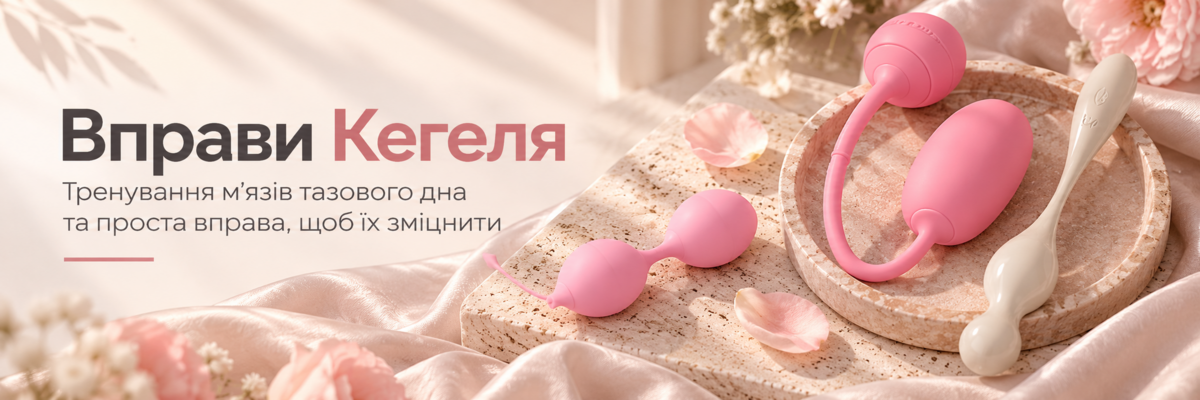
Kegel exercises help you control your intimate muscles and support pelvic floor health. In this article, we explain how the muscles work, how to train without harm, why training balls are used, and when you need a doctor's help.
Why pelvic floor exercises matter and what to expect from pelvic floor muscle training
The pelvic floor muscles support the pelvic organs and take part in controlling urination and defecation. Properly chosen exercises can help reduce urine leakage when coughing, laughing or exercising. They are also included in postpartum recovery programs. Kegel exercises for women are often used as part of the treatment of urinary incontinence, but not as the only method.
Kegel exercises are a conscious tensing and relaxing of the pelvic floor muscles. The method was developed by the gynecologist Arnold Kegel. The exercises train a group of muscles on which tone and control of urination depend. Not only strength matters, but also coordination and the ability to relax completely after tension. So if you have pain or difficulty relaxing, do not increase the number of repetitions on your own.
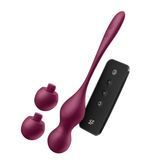
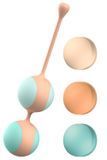
Vaginal balls are sometimes considered an additional training tool. However, they do not replace proper technique and are not suitable for everyone. Before using weighted trainers, find out whether you actually need them in your situation.
A brief look at anatomy: what functions the pelvic floor and pelvic floor muscles perform
The pelvic floor is a complex of muscles and connective tissue in the lower part of the pelvis. In women, it supports the bladder, the uterus and the rectum. The muscles work in coordination: they contract to hold in urine, gas and stool, and relax when needed. They affect the condition of the pelvic organs and the quality of sexual life.
Problems are not always caused by weakness alone. Poor coordination, excessive tension or reduced muscle tone can also cause discomfort. Sometimes the cause is prolapse, when the pelvic organs shift downward, or displacement of the uterus. That is why the same program for strengthening the pelvic floor muscles does not suit everyone, especially in case of pain or after surgery.
How to find the right muscles and do Kegel exercises: Kegel gymnastics step by step
Imagine you are trying to hold back gas and urination at the same time. The right sensation is a gentle squeeze of the vaginal muscles and a lift inward, not bearing down. Proper technique and a gentle lift activate the right muscles, not the whole abdomen. To get to know the movement, choose a comfortable position: sitting or lying down.
The basic Kegel exercise: how to feel the right muscles
During exercise, breathe freely, try not to squeeze your thighs, and do not tense your buttock muscles. After each contraction, relax the muscles completely. Try to contract only the muscles you feel inside. If instead of a lift you feel a pushing-out sensation, reduce the load and go back to simple movements. Do not train by regularly stopping the stream of urine: this can disrupt normal emptying of the bladder.
How to do the exercise and what you should not tense
Training programs combine slow squeezes with a short hold and quick squeezes followed by relaxation. Start with a duration and number of repetitions that you can do without pain, breath-holding or loss of technique. Later, hold the tension for 3-5 seconds and gradually increase the number of repetitions. You do not need to hold the tension for ten seconds from the first session.
If it is hard to tell whether you are doing the exercise correctly, see a physical therapist who works with the pelvic floor. The specialist will assess your technique and choose the load. The effectiveness of Kegel exercises depends on technique and consistency, and the results of regular practice are judged gradually, not after a few attempts.
Why training balls are used and how to use them
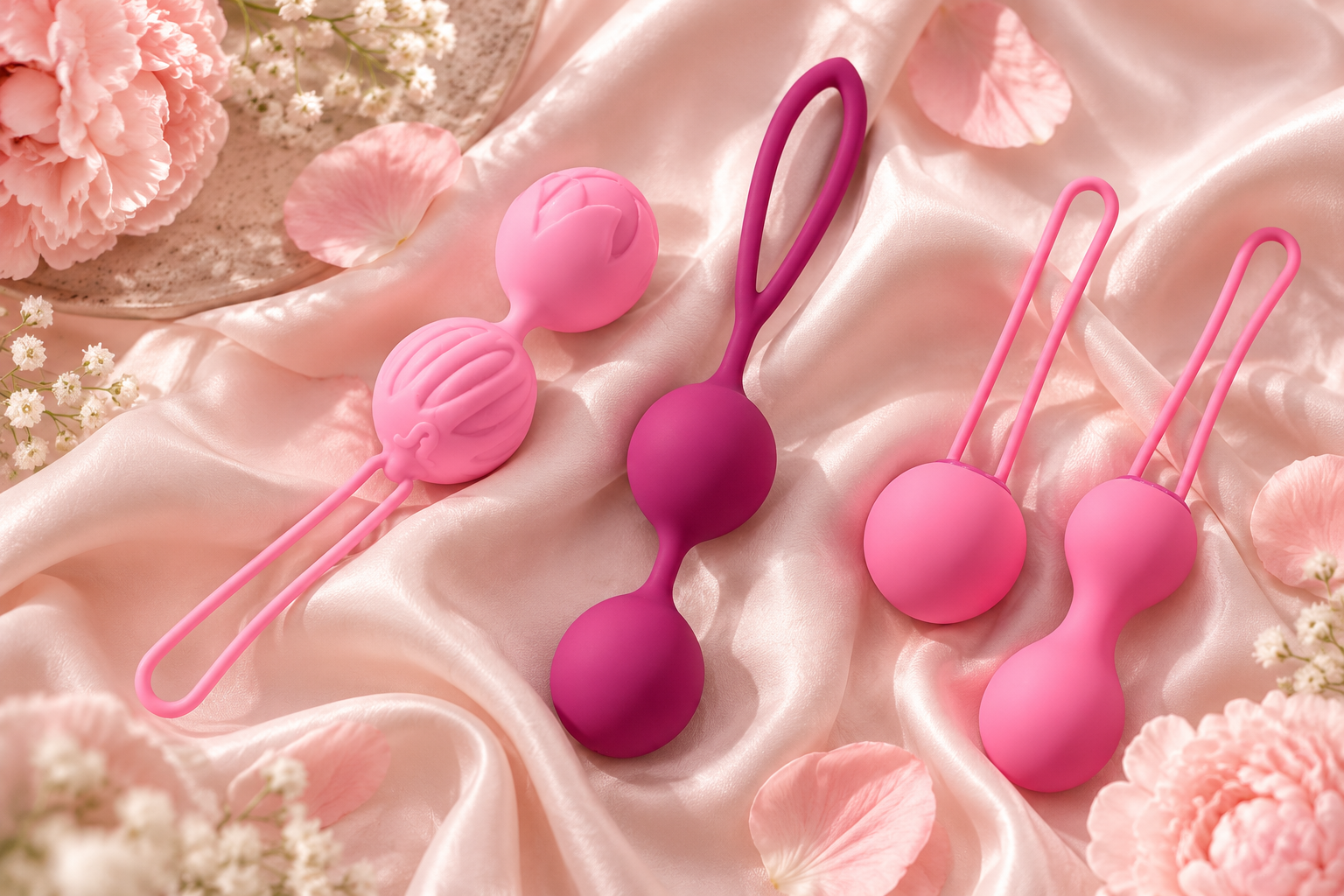
Balls differ in weight, size and design. Not every intimate accessory is a medical trainer. In treatment programs, a set of vaginal cones may be used, but you should not automatically transfer their purpose to any balls from a catalog. The choice of balls depends on the condition of the muscles.
Weighted devices can complement training if a specialist recommended them. The choice of starting weight, session length and method of use depends on the condition of the muscles and the specific model. There is no universal wearing schedule for everyone.
You do not need to keep a ball in for as long as possible or keep the muscles tense all the time. If pain, pressure, irritation or unusual discharge appears, stop using it. Increase the weight only when it fits your program and does not make you feel worse.
Biofeedback and electrical stimulation
Trainers with biofeedback show data about muscle work through an image or a sound signal. Depending on the sensor, they record pressure or muscle activity. This can help you understand the movement, but the reading on the screen does not replace an assessment of technique.
Electrical stimulation is a different method: the device sends electrical impulses according to a set program. It does not need to be added to every workout. Indications, contraindications and settings are determined together with a specialist.
The choice between regular exercises, weighted devices and biofeedback depends on the specific goal. An additional trainer is not necessarily needed to get results.
Hygiene, care and storage of devices
Before use, check the integrity of the surface and clean the product according to the manufacturer's instructions. After the session, wash it in the recommended way, dry it completely and put it in a separate clean pouch.
The cleaning method depends not only on the material but also on the design. Do not boil silicone, glass or metal products without the manufacturer's direct permission. Models with electronics must not be immersed in water unless the instructions allow it.
Cracks, damage, stickiness or other changes to the surface are a reason to stop using the product. Do not try to compensate for defects with more thorough washing.
When comparing devices at SafeYourLove, pay attention to the material, weight, dimensions and instructions. If the characteristics you need are not in the description, ask the seller. The choice of a treatment program should be discussed with a medical specialist.
Kegel exercises during pregnancy, postpartum recovery and when to see a specialist
Exercises can be part of care during pregnancy and after childbirth. During childbirth the muscles stretch considerably, so the timing of returning to exertion and the possibility of using internal devices depend on how the birth went, on healing and on how you feel.
After tears, stitches, gynecological surgery or other surgical intervention, do not start using vaginal trainers without your doctor's approval. During pregnancy, the use of weighted devices and electrical stimulators also needs a separate assessment.
Urinary incontinence, a feeling of pressure or bulging in the vagina, pain or difficulty emptying are reasons to see a specialist. This does not necessarily mean you need more strengthening exercises. Weak muscles can contribute to urinary incontinence, but the causes vary.
In case of bleeding, severe or increasing pain, a raised temperature or unusual discharge, stop using the device and seek medical help. Do not continue exercising through pain.
Conclusion
It is best to start Kegel gymnastics with simple exercises: it is a skill of control and relaxation, not a competition in strength. Pay attention to technique and how you feel, and add extra devices only when needed and after consulting a specialist.
We regularly share tips and news in the SafeYourLove Telegram channel. Join us if you want to be the first to hear what's new.